Blog Article
Meniscal Root Tear Symptoms: Causes, Diagnosis, Treatment & Recovery
Expert Insights from Dr. Ganesh Shirsath – Orthopedic Surgeon & Sports Injury Specialist in Kalyan
Published on 14 October, 2026
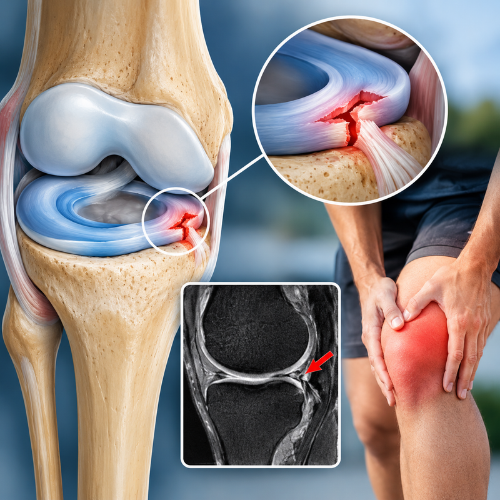
Many people experience knee pain after a twisting injury, sports activity, squatting, or even a simple misstep. While some injuries improve with rest, others involve damage to important structures inside the knee.
One such injury is a meniscal root tear, a condition that can sometimes be overlooked because its symptoms may resemble a minor knee strain or a routine meniscus injury.
Dr. Ganesh Shirsath, orthopedic doctor in Kalyan, specializes in diagnosing and treating knee injuries, sports injuries, meniscus tears, and arthroscopic knee conditions. Early diagnosis of a meniscal root tear is important because untreated injuries may affect knee function and place additional stress on the joint.
Quick Answer: What Is a Meniscal Root Tear?
A meniscal root tear occurs when the attachment of the meniscus to the bone becomes damaged or torn.
The meniscus acts as a shock absorber inside the knee. When the root attachment is injured, the meniscus may lose its ability to distribute load effectively across the knee joint. Common symptoms include:
- Knee pain
- Swelling
- Pain during squatting
- Clicking or catching sensations
- Difficulty walking long distances
- Pain during twisting movements
Early evaluation can help determine the most appropriate treatment and reduce the risk of further joint damage.
What Is a Meniscal Root Tear?
The knee contains two menisci:
- Medial meniscus (inner side)
- Lateral meniscus (outer side)
These crescent-shaped structures help:
- Absorb shock
- Distribute body weight
- Protect knee cartilage
- Improve joint stability
A meniscal root tear occurs when the attachment of the meniscus to the bone becomes torn or detached.
Because the meniscus cannot function normally after a root injury, increased pressure may be placed on the knee joint. This is why early diagnosis and appropriate treatment are important.
What Are the Symptoms of a Meniscal Root Tear?
Symptoms vary depending on the severity of the injury.
Common Meniscal Root Tear Symptoms
- Pain on the inner side of the knee
- Pain at the back of the knee
- Swelling around the knee
- Pain while squatting
- Difficulty climbing stairs
- Pain during twisting movements
- Clicking sensations
- Catching or locking sensations
- Knee weakness
- Reduced knee movement
Some patients continue walking normally despite the injury, which can delay diagnosis.
What Causes a Meniscal Root Tear?
Meniscal root tears may occur suddenly or develop gradually over time.
Common Causes Include:
Twisting Injury
A sudden twist while the foot remains planted can injure the meniscal root.
Sports Activities
Football, cricket, badminton, basketball, tennis, and similar sports may increase the risk.
Deep Squatting
Repeated stress on the knee during squatting may contribute to injury.
Heavy Lifting
Lifting heavy objects while twisting can place excessive force on the meniscus.
Age-Related Degeneration
In some individuals, the meniscus gradually weakens with age and becomes more prone to tearing.
Why Are Meniscal Root Tears Sometimes Missed?
Meniscal root tears do not always cause dramatic symptoms immediately.
Some patients experience:
- Mild to moderate pain
- Occasional swelling
- Gradual worsening of symptoms
Because the symptoms can resemble a muscle strain, arthritis, or a simple knee sprain, a meniscal root tear may not be recognized during the early stages.
Persistent knee pain should never be ignored, particularly after a twisting injury.
Meniscal Root Tear vs Meniscus Tear
Many patients are familiar with the term "meniscus tear," but a root tear involves a specific part of the meniscus attachment.
| Feature | Meniscus Tear | Meniscal Root Tear |
|---|---|---|
| Location | Meniscus tissue | Meniscus attachment |
| Knee pain | Common | Common |
| Squatting pain | Common | Common |
| Swelling | Possible | Common |
| Joint loading affected | Variable | Often significant |
| May require repair | Sometimes | Selected cases |
A detailed evaluation is important to identify the exact nature of the injury.
How Is a Meniscal Root Tear Diagnosed?
Clinical Examination
An orthopaedic specialist will evaluate:
- Pain location
- Swelling
- Knee movement
- Tenderness
- Symptoms during twisting or squatting
MRI Scan
MRI of the knee is often helpful when a meniscal root injury is suspected. MRI can evaluate:
- Meniscal root tears
- Meniscus injuries
- Cartilage damage
- Ligament injuries
- Associated knee conditions
Accurate diagnosis helps guide treatment decisions.
Does Every Meniscal Root Tear Need Surgery?
No. Treatment depends on:
- Type of tear
- Severity of injury
- Knee alignment
- Cartilage condition
- Activity level
- Age
- Individual goals
Non-Surgical Treatment
For selected patients, treatment may include:
- Activity modification
- Physiotherapy
- Muscle strengthening
- Weight management
- Pain management strategies
- Rehabilitation exercises
Not all meniscal root tears require surgery.
When Is Meniscal Root Repair Recommended?
Meniscal root repair may be considered when:
- The tear is suitable for repair
- Symptoms persist despite conservative treatment
- Knee function is significantly affected
- The treating surgeon believes repair may improve knee mechanics
Modern treatment is often performed using arthroscopic knee surgery, which allows surgeons to evaluate and treat structures inside the joint through small incisions.
The most appropriate treatment should always be determined after a detailed orthopaedic assessment.
How Long Does Recovery Take?
Recovery varies depending on:
- Type of tear
- Treatment performed
- Rehabilitation progress
- Overall knee health
A well-structured rehabilitation program is important whether treatment is surgical or non-surgical. Your orthopaedic surgeon and physiotherapy team will guide activity progression and recovery milestones.
Expert Insight from Dr. Ganesh Shirsath
"Meniscal root tears can sometimes be overlooked because patients may continue walking despite the injury. Persistent pain while squatting, climbing stairs, or twisting the knee should not be dismissed. Early diagnosis can help identify the underlying problem and guide timely treatment."
When Should You See an Orthopedic Doctor?
Consult an orthopaedic specialist if you experience:
- Ongoing knee pain
- Knee swelling
- Pain while squatting
- Difficulty climbing stairs
- Clicking or catching sensations
- Knee pain after sports activity
- Persistent symptoms after a twisting injury
If you are looking for meniscus treatment in Kalyan, sports injury treatment in Kalyan, or evaluation of ongoing knee pain, early assessment can help identify the cause and guide appropriate treatment.
Key Takeaways
- A meniscal root tear affects the attachment of the meniscus to the bone.
- Symptoms often include knee pain, swelling, squatting pain, and clicking sensations.
- These injuries may sometimes be mistaken for a simple knee strain.
- MRI can help confirm the diagnosis.
- Not every meniscal root tear requires surgery.
- Physiotherapy and rehabilitation play an important role in recovery.
- Early diagnosis may help prevent further knee problems.
About Dr. Ganesh Shirsath
Dr. Ganesh Shirsath is an orthopedic doctor in Kalyan with expertise in sports injuries, arthroscopic knee surgery, meniscus injuries, ligament reconstruction, and advanced orthopaedic care. With more than 15 years of experience, he helps patients return to active and pain-free lives through personalized treatment plans.
Frequently Asked Questions (FAQs)
Expert answer by Dr Ganesh Shirsath, Orthopedic Doctor in Kalyan