Blog Article
Hip Labral Tear Symptoms: Causes, Diagnosis, Treatment & Recovery
Expert insights from Dr. Ganesh Shirsath – Orthopedic Doctor in Kalyan
Published on 21 October, 2026
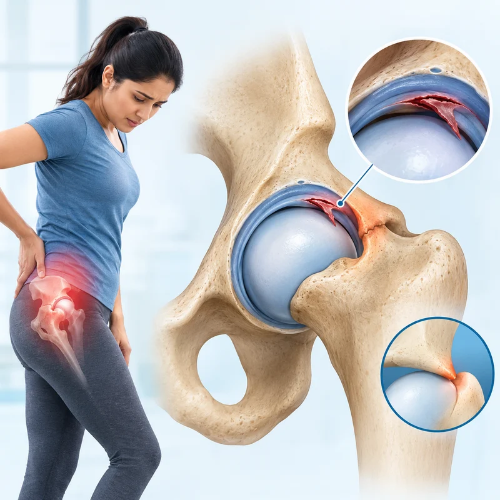
Persistent groin pain, hip clicking, discomfort while sitting, or pain during running and sports should not be ignored. While many people assume these symptoms are caused by a muscle strain, they may be signs of a hip labral tear, a condition that affects the cartilage surrounding the hip socket.
One of the most common causes of a hip labral tear is Femoroacetabular Impingement (FAI), also known as hip impingement.
Dr Ganesh Shirsath, orthopedic doctor in Kalyan, specializes in sports injuries, arthroscopic procedures, and joint preservation treatments, including the diagnosis and treatment of hip labral tears and hip impingement. Early evaluation can help identify the cause of ongoing hip pain and guide appropriate treatment.
Quick Answer: Can Hip Impingement Cause a Hip Labral Tear?
Yes.
Femoroacetabular Impingement (FAI) occurs when there is abnormal contact between the ball and socket of the hip joint. Over time, this repeated friction may damage the labrum, leading to a hip labral tear.
Common symptoms include:
- Groin pain
- Pain in the front of the hip
- Hip clicking and pain
- Hip pain while sitting
- Hip pain during running
- Stiffness and reduced hip movement
Early diagnosis can help identify the underlying cause and prevent symptoms from affecting daily activities and sports performance.
What Is a Hip Labral Tear?
The hip joint is a ball-and-socket joint that allows smooth movement during walking, running, bending, and sports activities.
Around the edge of the hip socket is a ring of cartilage called the labrum.
The labrum helps:
- Improve hip stability
- Support smooth joint movement
- Protect the joint surfaces
- Maintain normal hip function
When the labrum becomes torn or damaged, it can lead to pain, clicking sensations, stiffness, and reduced mobility.
What Is Femoroacetabular Impingement (FAI)?
Femoroacetabular Impingement (FAI) is a condition in which there is abnormal contact between the ball and socket of the hip joint.
This can occur due to:
- An abnormal shape of the femoral head (ball)
- An abnormal shape of the hip socket
- A combination of both
Repeated contact during movement can place stress on the labrum and surrounding cartilage, increasing the risk of a hip labral tear.
FAI is often seen in:
- Athletes
- Runners
- Dancers
- Gym enthusiasts
- Active adults
However, it can affect people of all ages and activity levels.
Hip Labral Tear Symptoms: Groin Pain, Hip Clicking & Pain While Sitting
Symptoms may develop gradually or appear during sports and physical activity.
Common Hip Labral Tear Symptoms
- Groin pain when walking
- Pain in the front of the hip
- Hip pain while sitting for long periods
- Hip pain during running
- Hip pain during sports
- Clicking or catching sensations in the hip
- Pain when squatting
- Stiffness in the hip joint
- Reduced hip movement
- Discomfort during twisting movements
- Locking sensations in the hip
Many patients initially believe they have a muscle strain, which can delay diagnosis and treatment.
Hip Impingement Symptoms: Why Does My Hip Hurt When I Sit, Walk, or Run?
People with hip impingement often experience:
- Groin pain during walking
- Pain while sitting for long periods
- A pinching sensation at the front of the hip
- Pain during running
- Difficulty squatting deeply
- Reduced flexibility
- Hip stiffness after activity
- Pain while changing direction during sports
These symptoms may gradually worsen if the underlying impingement continues to irritate the labrum.
Why Are Hip Labral Tears Sometimes Missed?
Hip labral tears are not always obvious.
Unlike fractures or severe injuries, many patients continue their everyday activities despite symptoms.
The condition may be mistaken for:
- A groin strain
- A hip flexor injury
- Muscle tightness
- Overuse from exercise
- General hip stiffness
When symptoms repeatedly return despite rest, the underlying problem may involve a hip labral tear or hip impingement.
Persistent hip pain should not be ignored.
Common Causes of Hip Labral Tears
Femoroacetabular Impingement (FAI)
One of the most common causes of labral damage.
Repetitive Sports Activities
Sports involving running, twisting, pivoting, and repeated hip movement may increase stress on the joint.
Structural Hip Variations
Some individuals naturally have hip anatomy that makes impingement more likely.
Repetitive Bending and Squatting
Repeated hip loading can contribute to symptoms over time.
Previous Hip Injury
Prior trauma may increase the risk of a labral tear.
Hip Labral Tear vs Muscle Strain
Many patients initially believe they have a muscle strain when the actual problem lies inside the hip joint.
| Symptom | Muscle Strain | Hip Labral Tear |
|---|---|---|
| Groin pain | Common | Common |
| Hip clicking | Rare | Common |
| Pain while sitting | Less common | Common |
| Catching sensation | Rare | Common |
| Reduced movement | Usually temporary | Often persistent |
| Symptoms repeatedly return | Less common | Common |
| Hip stiffness | Mild | More noticeable |
A proper orthopedic evaluation helps identify the true source of symptoms.
How Is a Hip Labral Tear Diagnosed?
Clinical Examination
Your orthopedic specialist will evaluate:
- Hip movement
- Pain location
- Flexibility
- Muscle strength
- Functional limitations
Certain movements may help reproduce symptoms and assist in diagnosis.
X-Rays
X-rays may help identify bony abnormalities associated with hip impingement.
MRI Scan
Advanced imaging may be recommended to evaluate:
- Hip labral tears
- Cartilage damage
- Soft tissue injuries
- Hip impingement
A diagnosis should always be based on symptoms, physical examination, and imaging findings together.
Can a Hip Labral Tear Heal Without Surgery?
Not every hip labral tear requires surgery.
Treatment depends on:
- Severity of symptoms
- Activity level
- Presence of hip impingement
- Functional limitations
- Overall hip health
Non-Surgical Treatment Options
Many patients benefit from:
- Activity modification
- Physiotherapy
- Hip strengthening exercises
- Core strengthening
- Mobility exercises
- Flexibility training
- Appropriate pain management when needed
The goal is to improve function and reduce symptoms.
When Is Hip Arthroscopy Recommended?
Hip arthroscopy may be considered when:
- Symptoms persist despite appropriate non-surgical treatment
- Daily activities become difficult
- Sports participation is limited
- Hip impingement contributes to ongoing symptoms
- Imaging findings support a treatable condition
Hip arthroscopy is a minimally invasive procedure performed through small incisions using a camera and specialized instruments.
In suitable cases, the procedure may involve:
- Repairing the torn labrum
- Addressing hip impingement
- Treating associated joint problems
Treating the underlying impingement is often important for long-term symptom relief.
How Long Does Recovery Take?
Recovery varies depending on:
- Severity of the condition
- Treatment approach
- Activity level
- Rehabilitation progress
Whether treatment is surgical or non-surgical, a structured rehabilitation program plays an important role in restoring strength, mobility, and function.
Recovery plans should always be individualized.
Expert Insight From Dr Ganesh Shirsath
"Many patients with hip labral tears initially assume they have a muscle strain or overuse injury. Persistent groin pain when walking, discomfort while sitting for long periods, hip clicking, or pain during running are symptoms that should not be ignored. Early diagnosis can help identify the underlying cause and guide appropriate treatment before the condition affects daily activities and mobility."
Key Takeaways
- Hip labral tears are a common cause of groin pain and front hip pain.
- Femoroacetabular Impingement (FAI) is one of the most common underlying causes.
- Symptoms often include hip clicking, groin pain when walking, pain while sitting, and discomfort during running or sports.
- MRI and clinical examination help establish the diagnosis.
- Not every hip labral tear requires surgery.
- Hip arthroscopy may be recommended in selected patients when symptoms persist despite conservative treatment.
- Early diagnosis can help preserve hip function and improve outcomes.
When Should You See an Orthopedic Doctor for Groin Pain or Hip Clicking?
If you experience persistent groin pain, hip clicking, stiffness, pain while sitting, pain during running, or recurring hip discomfort that does not improve with rest, medical evaluation may be helpful.
Early assessment can identify conditions such as hip labral tears and hip impingement before they begin significantly affecting mobility, exercise, sports participation, and quality of life.
Dr Ganesh Shirsath, orthopedic doctor in Kalyan, evaluates and treats sports injuries, hip disorders, and arthroscopic conditions, helping patients understand the cause of their symptoms and the treatment options appropriate for their individual situation.
About Dr Ganesh Shirsath
Dr Ganesh Shirsath is an orthopedic doctor in Kalyan with expertise in sports injuries, hip arthroscopy, knee arthroscopy, joint preservation procedures, and advanced orthopedic care. With more than 15 years of experience, he helps patients return to active lifestyles through evidence-based and individualized treatment plans.
Frequently Asked Questions (FAQs)
Expert answers by Dr Ganesh Shirsath, orthopedic doctor in Kalyan