Blog Article
ACL Tear Symptoms You Should Never Ignore: When Knee Instability Needs Immediate Attention
A popping sound, rapid swelling, or a knee that gives way after a twist or fall could mean an ACL tear. Here's what every athlete and active adult should know.
Published on 2 July, 2026
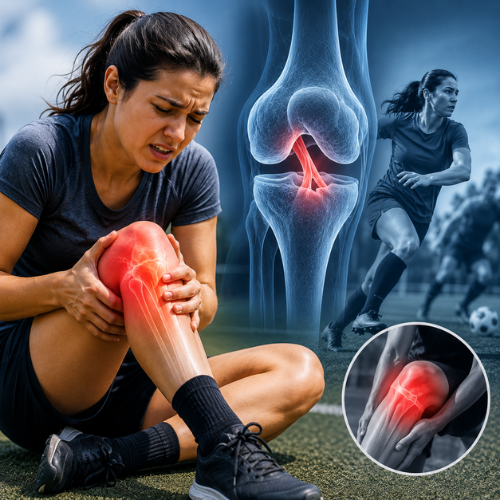
A sudden twist of the knee during sports, an awkward landing after a jump, or a road accident can cause a serious knee ligament injury, especially an ACL tear.
Ignoring the early ACL tear symptoms can lead to persistent pain, knee instability, and long-term joint damage. Dr. Ganesh Shirsath, an experienced orthopedic doctor and sports injury specialist, emphasizes that early diagnosis and timely ACL injury treatment can significantly improve recovery and help patients return to their normal activities safely.
What is an ACL Tear?
The Anterior Cruciate Ligament (ACL) is one of the four major ligaments that stabilize the knee joint. It connects the thigh bone (femur) to the shin bone (tibia) and prevents excessive forward movement and rotation of the knee.
An ACL tear occurs when this ligament is stretched beyond its limit or completely ruptures. It is one of the most common injuries among athletes but can affect anyone after a sudden knee injury.
ACL Tear Symptoms You Should Never Ignore
Recognizing the symptoms early can prevent further damage to the knee.
- A loud "pop" sound at the time of injury
- Severe knee pain that begins immediately
- Rapid swelling within a few hours
- Knee instability — the knee suddenly gives way
- Reduced range of motion
- Difficulty bearing weight while standing or walking
Common Causes of ACL Tears
Several situations can result in an ACL injury, including:
- Sudden twisting or pivoting movements
- Landing incorrectly after a jump
- Sudden stopping while running
- Direct impact during sports
- Road traffic accidents
- Falls from height
Sports like football, basketball, cricket, badminton, volleyball, and skiing carry a higher risk.
Who is at Higher Risk?
You may be more likely to suffer an ACL tear if you:
- Participate in high-impact sports
- Have weak leg muscles
- Have poor balance or improper training techniques
- Previously injured your knee
- Wear inappropriate footwear during sports
Why You Should Never Ignore ACL Tear Symptoms
Ignoring an ACL injury can lead to:
- Chronic knee instability
- Repeated episodes of the knee giving way
- Meniscus tears
- Cartilage damage
- Early osteoarthritis
- Reduced athletic performance
- Difficulty performing daily activities
Early treatment can prevent these long-term complications.
How is an ACL Tear Diagnosed?
An orthopedic doctor typically performs a physical examination, knee stability tests, X-rays to rule out fractures, and an MRI scan to confirm ligament damage. Accurate diagnosis helps determine the severity of the injury and the best treatment plan.
ACL Injury Treatment Options
Treatment depends on the patient's age, activity level, and severity of the injury.
Non-Surgical Treatment
Partial ACL tears or low-activity individuals may benefit from:
- Rest, ice, compression, elevation (RICE)
- Knee braces
- Physiotherapy
- Muscle strengthening exercises
Many patients recover well with structured rehabilitation.
ACL Reconstruction Surgery
For complete ligament tears or active individuals, ACL reconstruction surgery is often recommended. The damaged ligament is replaced using a tendon graft taken from the patient's own body or a donor. The procedure is performed arthroscopically through small incisions, offering:
- Less pain
- Smaller scars
- Faster recovery
- Improved knee stability
- Better return to sports
Recovery After ACL Reconstruction Surgery
Recovery is gradual and requires commitment to rehabilitation. Typical recovery timeline:
- Walking with support: 2–4 weeks
- Light activities: 6–12 weeks
- Jogging: around 4 months
- Return to sports: 8–12 months
Following physiotherapy is essential for achieving the best outcome.
Tips to Prevent ACL Injuries
You can reduce your risk by:
- Strengthening leg muscles
- Warming up before exercise
- Improving balance and flexibility
- Learning proper jumping and landing techniques
- Wearing appropriate sports footwear
- Avoiding overtraining
When Should You See an Orthopedic Doctor?
Seek immediate medical attention if you experience:
- A popping sound after knee injury
- Rapid swelling
- Severe knee pain
- Knee instability while walking
- Difficulty bearing weight
- Limited knee movement
Prompt evaluation can help prevent permanent damage and improve recovery.
FAQs
1. What are the first signs of an ACL tear?
The earliest ACL tear symptoms include a popping sound, sudden knee pain, rapid swelling, and a feeling that the knee is unstable or giving way.
2. Can an ACL tear heal without surgery?
Partial ACL tears may heal with physiotherapy, bracing, and rehabilitation. However, complete tears often require ACL reconstruction surgery, especially in active individuals or athletes.
3. How long does recovery take after ACL reconstruction surgery?
Most patients return to daily activities within a few months, while returning to competitive sports generally takes 8–12 months, depending on rehabilitation progress.
4. When should I consult an orthopedic doctor for a knee ligament injury?
You should consult an orthopedic doctor immediately if you experience severe knee pain, swelling, knee instability, difficulty walking, or suspect a knee ligament injury after trauma or sports activity.
Consult Dr. Ganesh Shirsath — Sports Injury & ACL Reconstruction Specialist in Kalyan
An ACL tear is more than just a sports injury — it can affect your mobility, confidence, and quality of life. Never ignore early symptoms such as swelling, pain, or knee instability.
Whether your injury requires rehabilitation or ACL reconstruction surgery, timely consultation with Dr. Ganesh Shirsath can help restore knee function and get you back to an active lifestyle.
Book an Appointment